
 Our flight to our next lodge in the Chobe National Park was a little over an hour. We were met at the airport and driven about 30 minutes to the Savute Safari Lodge where we would spend the next two days. Our room looked out over a water hole that had Elephants drinking from it and the odor of elephant dung wafted in the air.
 The Chobe is known for having one of the worlds largest elephant populations and is
the second largest national park in Botswana encompassing nearly 11,000 sq. km. renowned for its uniqueness and abundance of wildlife.
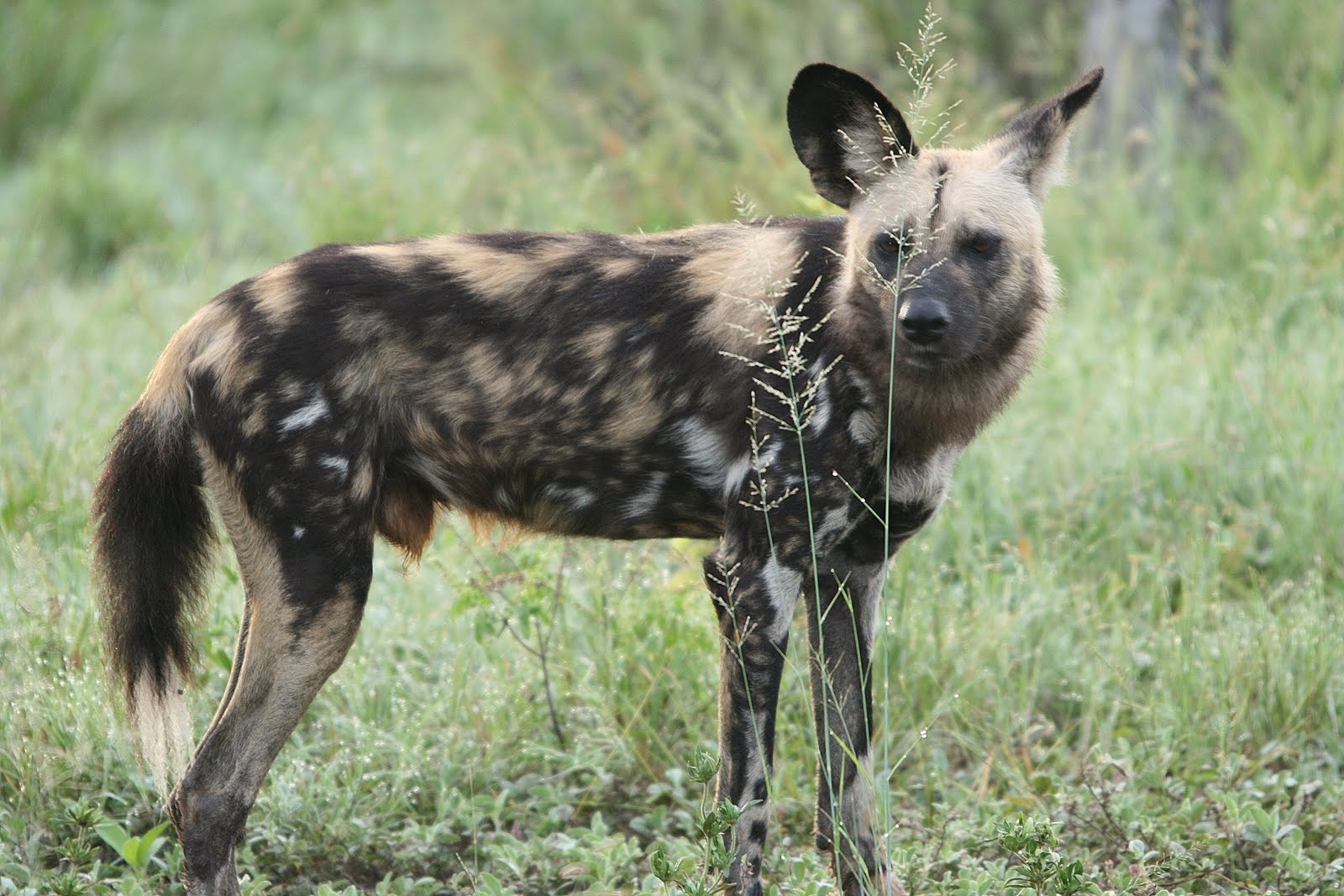 The African Wild Dog has large rounded ears a "Hyena-like" head and beautiful
mottled black, white with shades of light yellow brown patches of short hair giving it a
very distinctive appearance.
This beautiful dog-like animal is only a distant relative to our domestic canids.
A small pack of four adults were found napping under a tree in the late afternoon.
We waited patiently until they arose to begin their evening sojourn and watched them eagerly as they trotted slowly away.
They are exclusively carnivorous and like the North American Wolf, hunt for their prey cooperatively. They can run up to 35 mph and as long as 3 miles making it difficult for their prey to escape.
We were thrilled to experience the sight of these rare animals since they are considered endangered with only 5,000 of them remaining.
The Blackbacked Jackal reminded us of the North American Coyote by the way it moves.
It has a distinctive black and silver "saddle."
An interesting habit of laying on Elephant dung to mask its odor also hides it from predators.

Our guide was a big African gentleman named Ngande with a deep voice and keen sense of humor. I found out early that he was not into birds as much as we were but he quickly caught on when I was stopping him frequently to take photos.
 A common resident throughout Botswana is the beautiful Lilac Breasted Roller.
 The Kori Bustard (Ardeotis kori) is the largest bustard in Botswana and have become extinct in some areas due to habitat destruction from agriculture, development, hunting and a slow reproductive rate.
They are mostly terrestrial and one of the heaviest birds capable of flying.
 The Southern Ground-Hornbill (Bucorvus leadbeateri) is also threatened in many parts of its range and confined to reserves and national parks.
 The Plains Zebra (Equus burchellii) was present in great numbers grazing in the Savute marsh where the grass was lush and not far from water. To see them in such high density in this vast savanna, each with their slightly varied markings was truely one of the heights of our experience.
 Hundreds of Cattle Egrets(Bubulcus ibis) followed the herd
 Our guide was constantly in touch by radio with other guides and learned of a pride of lions found a few miles away. We arrived within minutes to see two male lions loafing in the shade in the late afternoon while other members of the pride were a few yards away near the water hole.
It was like watching a National Geographic episode on TV in HD but this time we were actually seeing the drama before us as it took place.
There less than 20 yards away were three 5 month old cubs drinking and playing near a water hole.

 The cubs attacked their parents playfully and generally ignored us and the
sound of our cameras clicking away.
 The cubs went to their mothers side periodically for comfort and affection which they received with licking and rubbing.
 We were immersed in the action before us for nearly 45 minutes but these precious moments would remain in our memories the rest of our lives.
On the way back to our lodge we saw dozens birds unfamiliar to us.
 The African Sacrid Ibis (Threskiornis aethiopicus) are common here but all of the wildlife in this wonderland were new for us.
 While passing through a grove of trees the stricking African Hoopoe (Upupa africana) posed briefly for a photo but didn't flair it's crest for us. Back in the open grassland a Northern Black Korhan (Eupodotis afraoides) appeared walking cautiously away from our approach.


Another amazing sunset on our last evening at Chobe as we headed back to our lodge with thoughts of the next adventure on the Zambesi River.


.JPG)


.JPG)


